
Tree removal vs. trimming after a North Texas storm
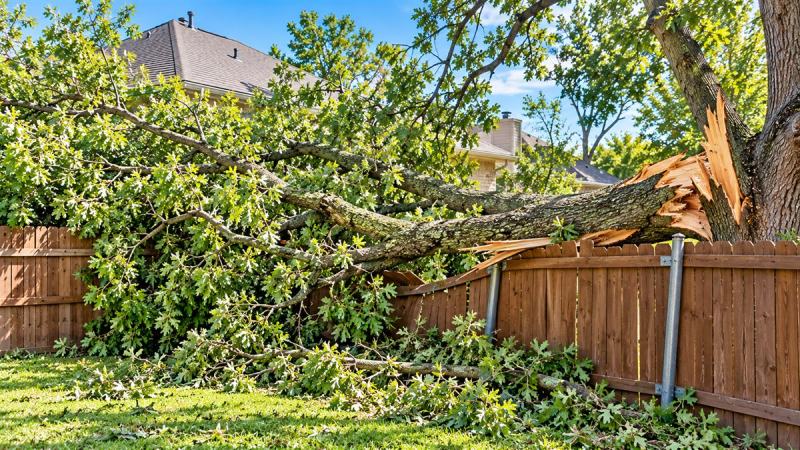
Most storm-damaged trees can be trimmed and saved. Remove the tree when the trunk is split, more than half the crown is gone, the root plate has lifted, or it was already declining and leans toward something that matters.
Spring storms come through Garland most years, and the morning after, the calls start: "A big limb came down. Is the whole tree going to fall? Do I have to take it out?"
Usually not. Most storm-damaged trees can be trimmed and saved. Some can't, and the ones that can't are dangerous to leave standing. Here's how we decide, and what to do before we get there.
The first 24 hours
Do
- Stay away from any limb touching a power line. Call the utility, not a tree company.
- Take photos before anything is moved, especially if a fence, roof or car is involved.
- Keep kids and pets out from under broken, hanging limbs. They come down without warning.
- Call early. After a big storm every tree crew in Dallas County is booked.
Don't
- Climb a ladder with a chainsaw. A cracked limb under tension can snap back when cut.
- Agree to a same-day removal from someone knocking on doors before the tree has been looked at. Plenty of trees that "have to come down today" don't.
When a tree can be trimmed and saved
- Less than about a third of the crown is gone. A live oak or cedar elm that lost a few big limbs fills back in over two or three seasons if the cuts are clean.
- The main trunk is intact. Broken side limbs are a trimming job. A split trunk is a different conversation.
- The tree was healthy before. Good leaf color, no fungus at the base, no hollow sound when you knock on it.
- It leans slightly, but the soil isn't heaved. If the ground on the far side of the trunk hasn't lifted, the roots are still anchored.
Trimming after a storm means cutting broken limbs back to a proper collar, taking out the hangers, and thinning the crown so the next wind moves through it instead of catching it like a sail. On oaks cut between February and June, we seal the wounds to keep oak wilt beetles out.
When removal is the safer call
- The trunk is split. Even if both halves stand, it can't be safely held together long term.
- More than half the crown is gone. The tree will spend years trying to recover and usually declines anyway.
- The root plate has lifted. Heaved soil on one side means the tree has partly uprooted. It will finish the job in the next storm, and you don't get to pick the direction.
- It was already in trouble. Dead top, mushrooms at the base, big cavities. The storm made the decision for you.
- It's over something that matters. A damaged tree leaning toward a house or street gets less benefit of the doubt than one in the back corner.
We take storm-damaged trees down in sections with ropes and rigging so nothing else gets hurt, grind the stump, and haul everything away. You can lay sod over the spot within a couple of weeks.
The trees we see most after Garland storms
- Red and Shumard oaks: lose big limbs at weak unions. Usually saveable with good trimming.
- Hackberries: fast-growing and brittle. The most common storm removal.
- Bradford pears: the classic split-down-the-middle tree. Almost always removal.
- Cedar elms: tough and flexible. Usually fine with a cleanup trim.
- Live oaks: heavy limbs can fail, but the tree itself rarely does. Trim and seal.
Not sure? Send us a photo.
A picture of the damage from a safe distance is usually enough for us to tell you whether it looks like a trim or a removal, and to get you on the schedule.
Storm damage? Text us a photo.
We reply within 24 hours, and fallen trees get priority.