
Tree trimming, removal and stump grinding in Garland, TX
Garland's older neighborhoods have big trees: live oaks, red oaks, cedar elms and pecans. They're an asset until a limb is over the roof or a spring storm drops half of one in the yard. That's when you call us.
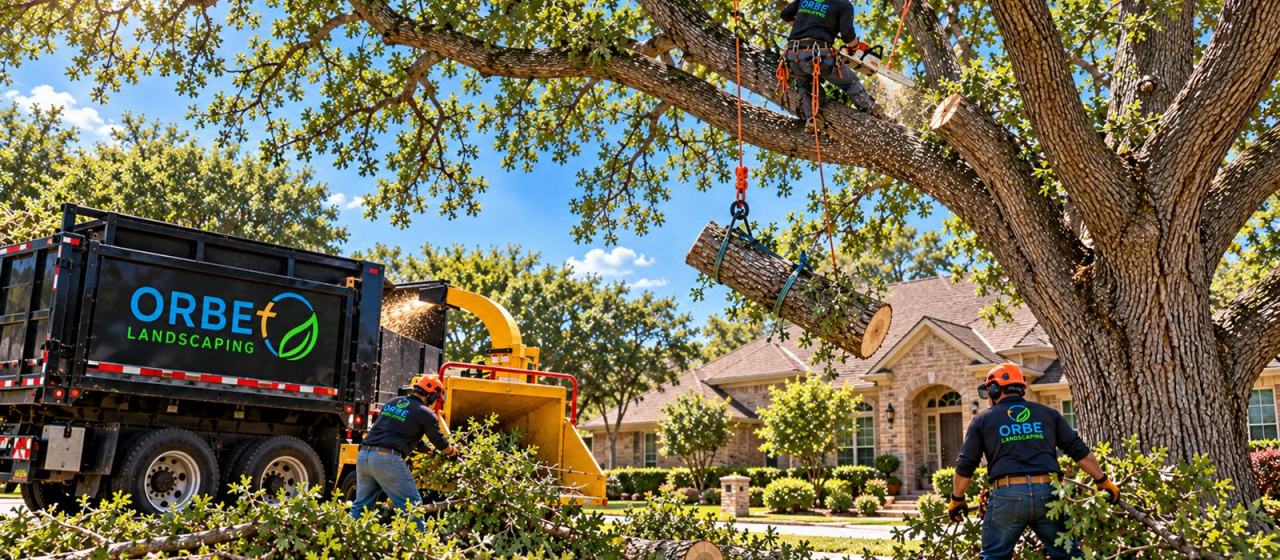
Trim it, remove it, or leave it alone?
The owner looks at every tree in person and tells you which one it is. Here's how we usually decide.
Trim it
Healthy tree, broken or crossing limbs, branches over the roof or driveway. Thinning lets wind through instead of catching the crown like a sail.
Tree trimmingRemove it
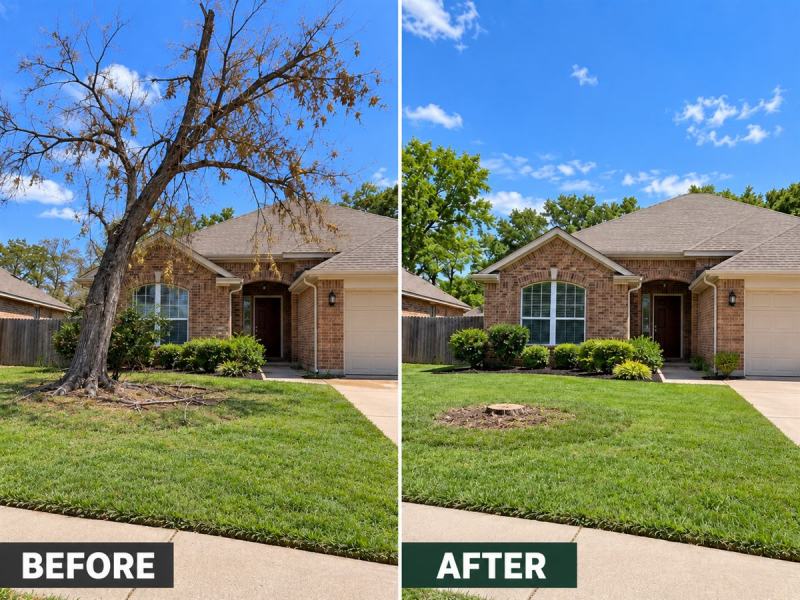
Split trunk, more than half the crown gone, a lifted root plate, or a dead tree leaning toward the house. Taken down in sections so nothing else gets hit.
Tree removalIt fell in the storm
Stay clear of power lines, take a few photos, then call or text. Fallen trees and blocked driveways go to the front of the line.
Storm cleanup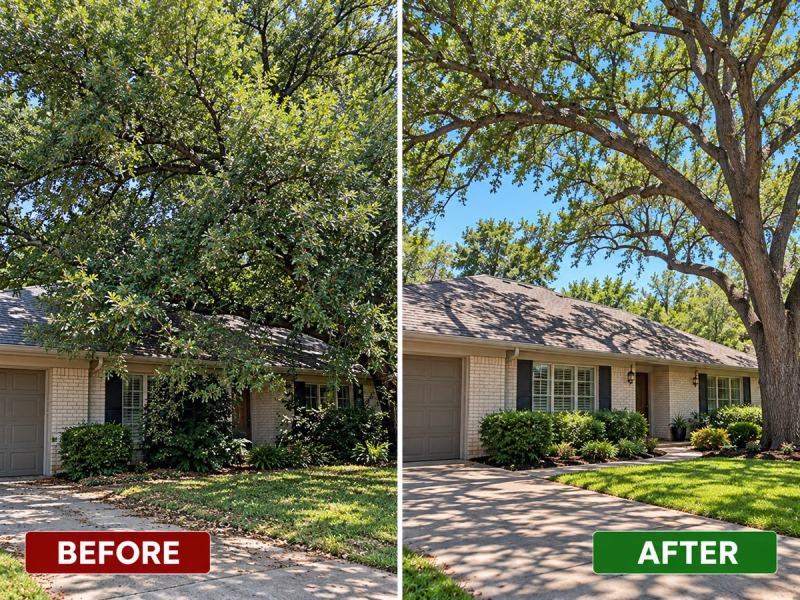
Good trimming is mostly about what you don't cut
We take out dead, crossing and rubbing limbs, thin the crown, raise the canopy off the roof and the driveway, and shape the tree without topping it. Topping ruins a tree's structure and invites rot, so we don't do it.
When to trim in North Texas: most trees any time of year, but oaks from July through January to lower the risk of oak wilt spreading through fresh cuts. We seal oak cuts when we have to work in the warm season.
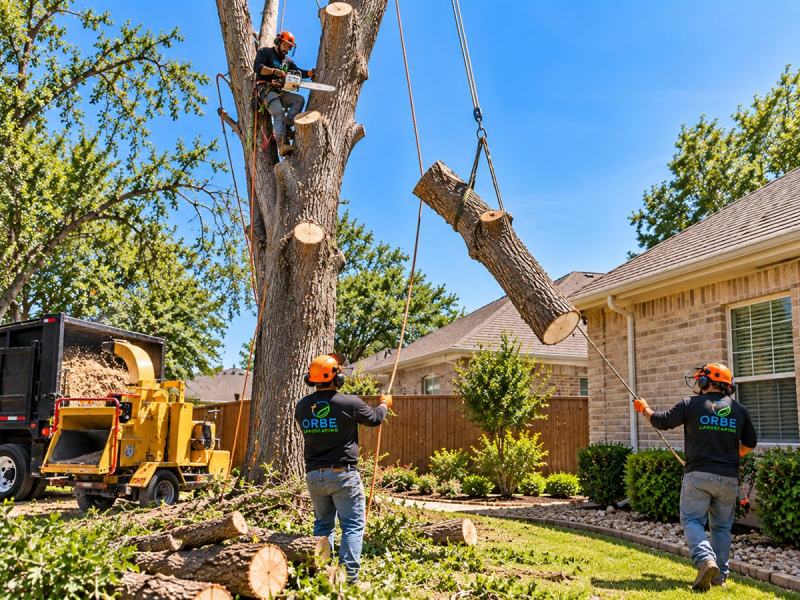
Down in sections, nothing else touched
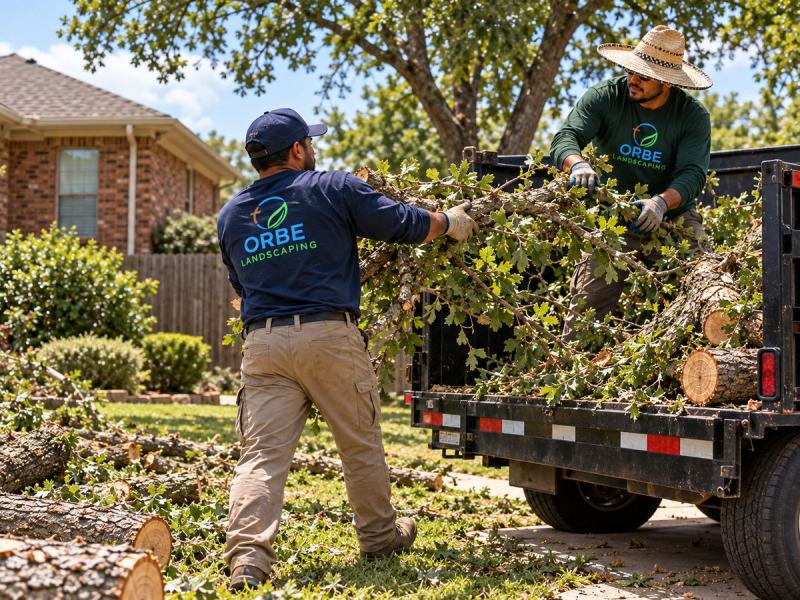
Dead or dying, split at the trunk, leaning toward the house, roots in the foundation, or simply the wrong tree in the wrong place. We take it down in sections with ropes and rigging so nothing lands on the roof, the fence or the neighbor's car, then haul the wood and brush. We can leave firewood rounds if you want them.
Permits: some cities in our area require one for larger or protected trees. We'll tell you if yours does and help with the paperwork.
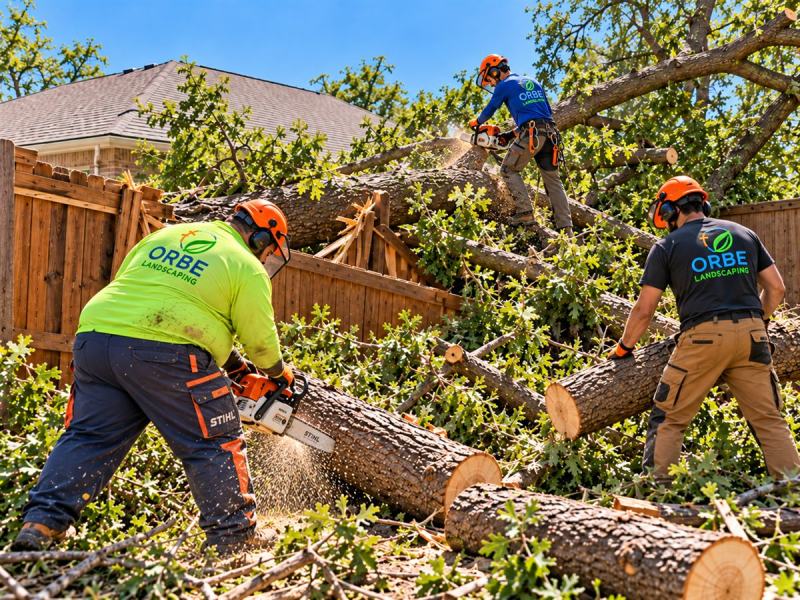
When a limb ends up on the fence
Spring in Garland means wind, hail and the occasional tree across the fence or the driveway. You need someone with a saw and a trailer who answers the phone. We clear fallen trees and hanging limbs, open up access, and haul everything away. Then we can grind the stump and repair the lawn on the same visit.
Remove or trim after a storm? Read the guide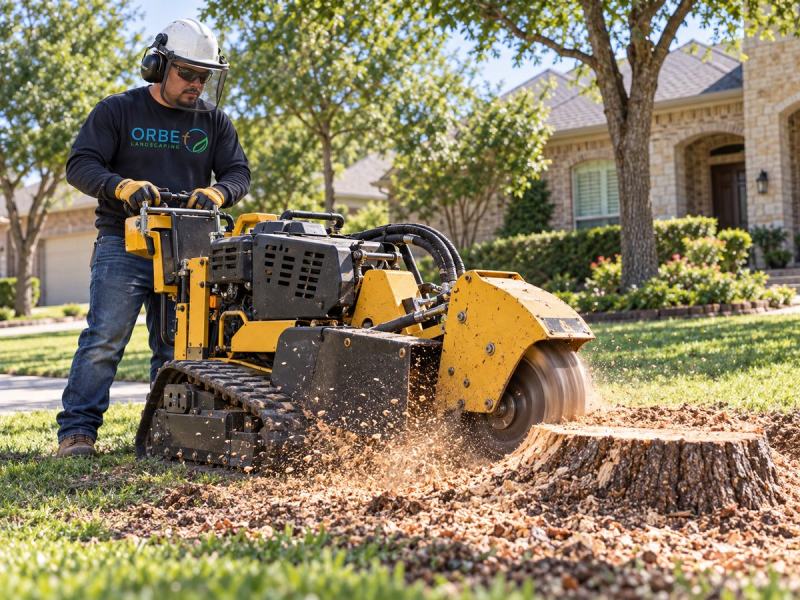
Finish the job, then plant the next one
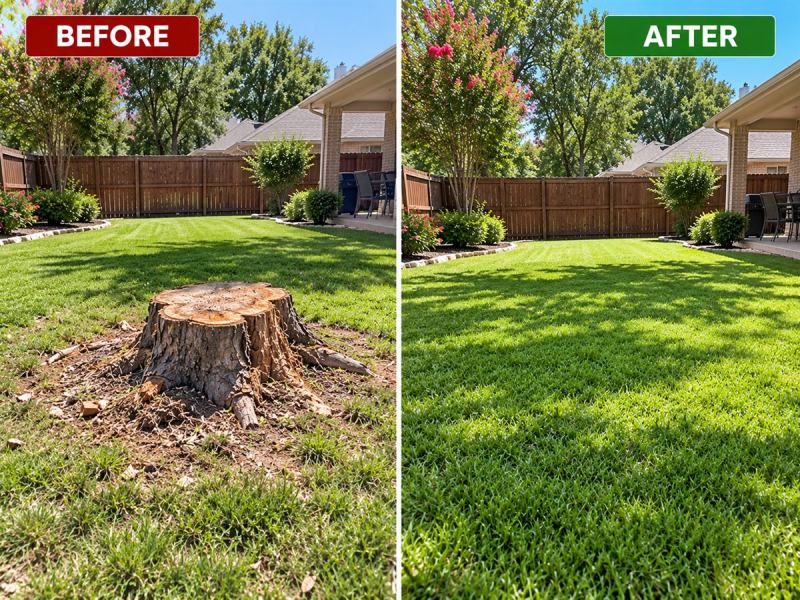
Stump grinding. Ground six to twelve inches below grade, chips raked out or hauled, backfilled with topsoil so you can sod or plant right over the spot.
Shrub pruning. Overgrown hollies, boxwoods and ligustrum cut back to a natural shape or a clean hedge line. Crape myrtles get structural pruning, not the yearly "crape murder" stubs.
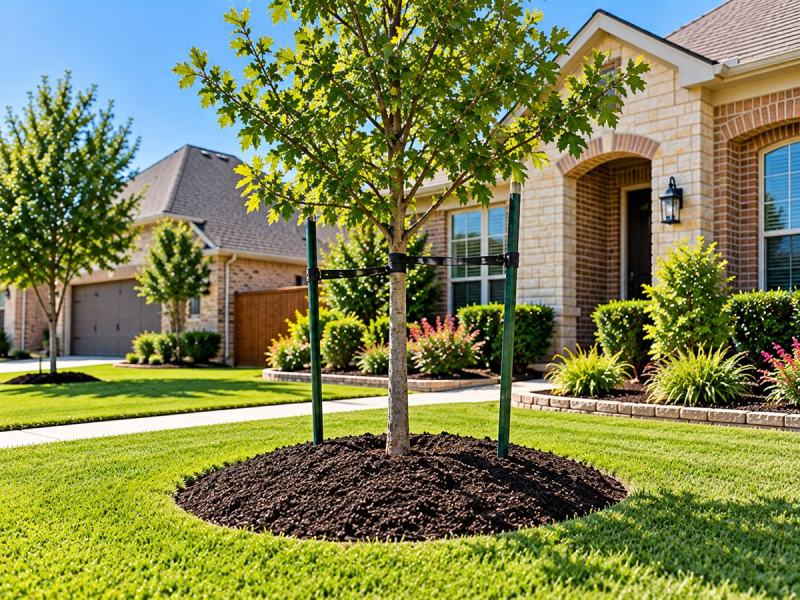
New trees. Species that handle clay and heat (live oak, cedar elm, bur oak, Chinese pistache), planted at the right depth with a mulch ring and stakes, best from October through February.
Before and after
What Garland homeowners ask us
Do I need a permit to remove a tree?
Sometimes, depending on the city and the size of the tree. We check and tell you before we schedule.
When is the best time to trim oaks?
July through January, outside the oak wilt season. If we have to work on an oak in the warm months, we seal the cuts.
Can you leave the firewood?
Yes. Tell us when you book and we'll cut the trunk into rounds and stack them where you want.
Do you guarantee the work?
Yes. If something isn't right, call us and we'll come back and make it right.
Tree on your mind? Send us a photo.
A picture from a safe distance is usually enough to tell you whether it's a trim or a removal, and to get you on the schedule.