
When to lay sod in Garland, TX (and how to keep it alive)
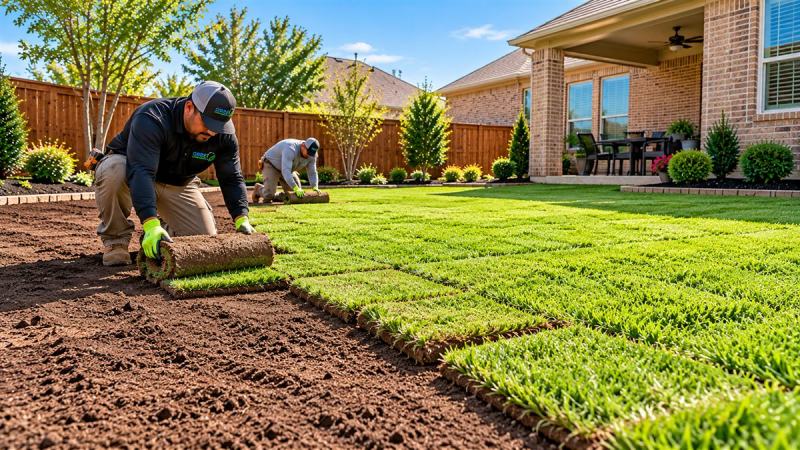
Lay sod in Garland from April through June for the best results. July through early September works with strict daily watering. Avoid November through February, when warm-season grass can't root.
New sod turns a patchy, weedy yard into a green lawn in one afternoon. Whether it still looks that way in October comes down to three things: when you lay it, how the ground was prepared, and how you water it for the first two weeks.
The best months
The three grasses that do well here, Bermuda, St. Augustine and Zoysia, are warm-season grasses. They root when the soil is warm and go dormant when it's cold.
- Best, April through June. Warm soil, long days, and all summer to root before winter.
- Good, July through early September. It works, and we do a lot of it, but the heat pulls moisture out fast, so watering has to be strict.
- Okay, late September into October. Get it down early. Bermuda laid in late October may not root before dormancy.
- Avoid, November through February. The sod sits brown until spring, and a lot of it won't come back.
If it's winter and the yard is a mess, the smart move is a cleanup and a plan now, and sod in April.
Which grass for which yard
- Bermuda: full sun, takes traffic and heat. The standard for most Garland front yards. Won't tolerate shade.
- St. Augustine: the one for yards with big trees. Handles partial shade, needs more water, and can get chinch bugs in August.
- Zoysia: dense, soft and slow-growing, with some shade tolerance. Costs more up front and needs less mowing once it's in.
If half the yard is under a live oak, we often put St. Augustine there and Bermuda in the sunny half.
Prep is most of the job
Sod laid over old grass, weeds and hard clay looks fine for a week, then dies from the bottom up. Our prep:
- Remove the old turf so new roots touch soil, not thatch.
- Grade and level so water runs away from the house, including that brown hump by the sidewalk.
- Loosen and amend the clay. We till the top few inches and work in compost so roots can get in.
- Lay tight, staggered seams with no gaps and no overlaps.
- Roll and water right away. The first watering happens before we leave the driveway.
The two-week watering plan
This is where most new sod dies, so we leave it in writing:
- Days 1 to 7: water every morning, enough to soak through into the soil below. Lift a corner to check. In July, add a short afternoon watering.
- Days 8 to 14: every other day, a little longer each time so roots chase the water down.
- Week 3 on: two or three deep waterings a week, then your city's normal watering schedule.
- First mow: about two weeks in, once you can't lift the sod by the corner. Mow high the first few times.
Skip fertilizer for the first month. The sod farm already did it.
Signs something's wrong
- Sod lifts easily after two weeks: not enough water, or the ground was too hard. Water more and call us.
- Brown edges, green centers: the seams are drying out. Hand-water the seams for a few days.
- Yellow patches spreading in August on St. Augustine: possibly chinch bugs. Look for tiny black bugs at the edge of the patch.
- Standing water after rain: a grading problem. That's what French drains are for.
Want it done right the first time?
Free sod estimates in Garland, Sachse, Rowlett, Wylie and East Dallas.